How to Get Your Practice Recommended by ChatGPT
The practical steps that make ChatGPT more likely to name your practice when a patient asks for a surgeon or med spa recommendation.
Eric Dunn
September 14, 2026
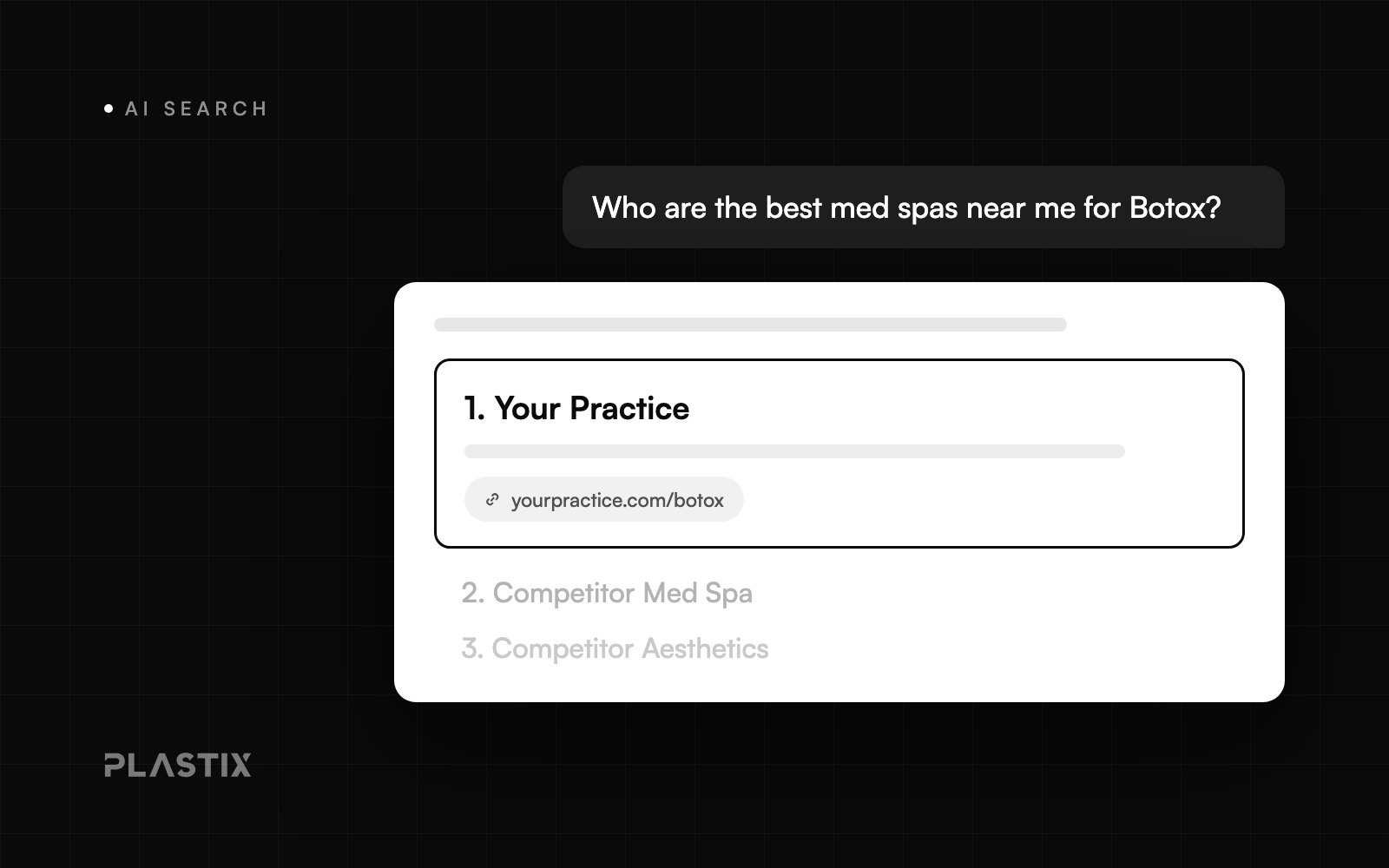
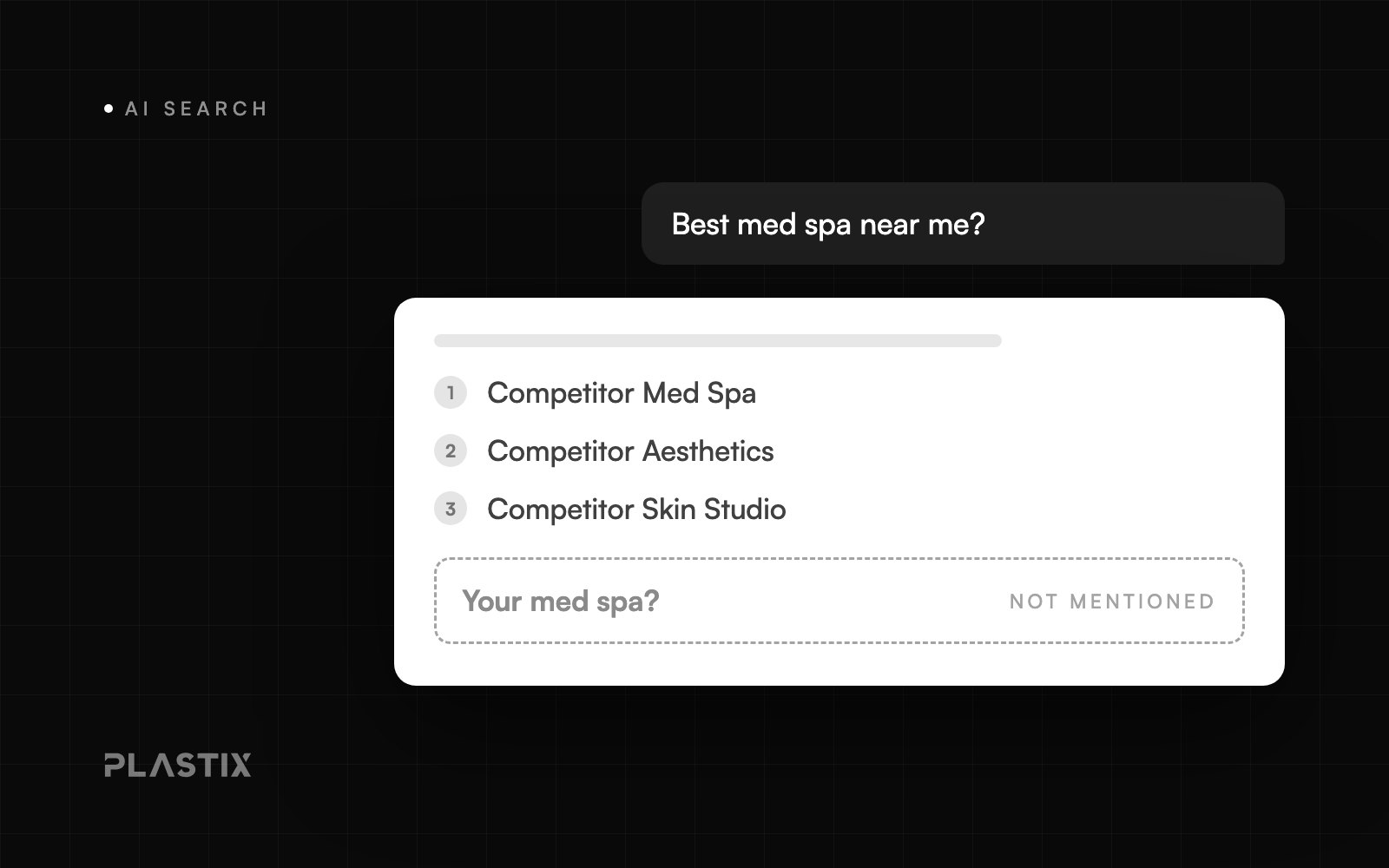
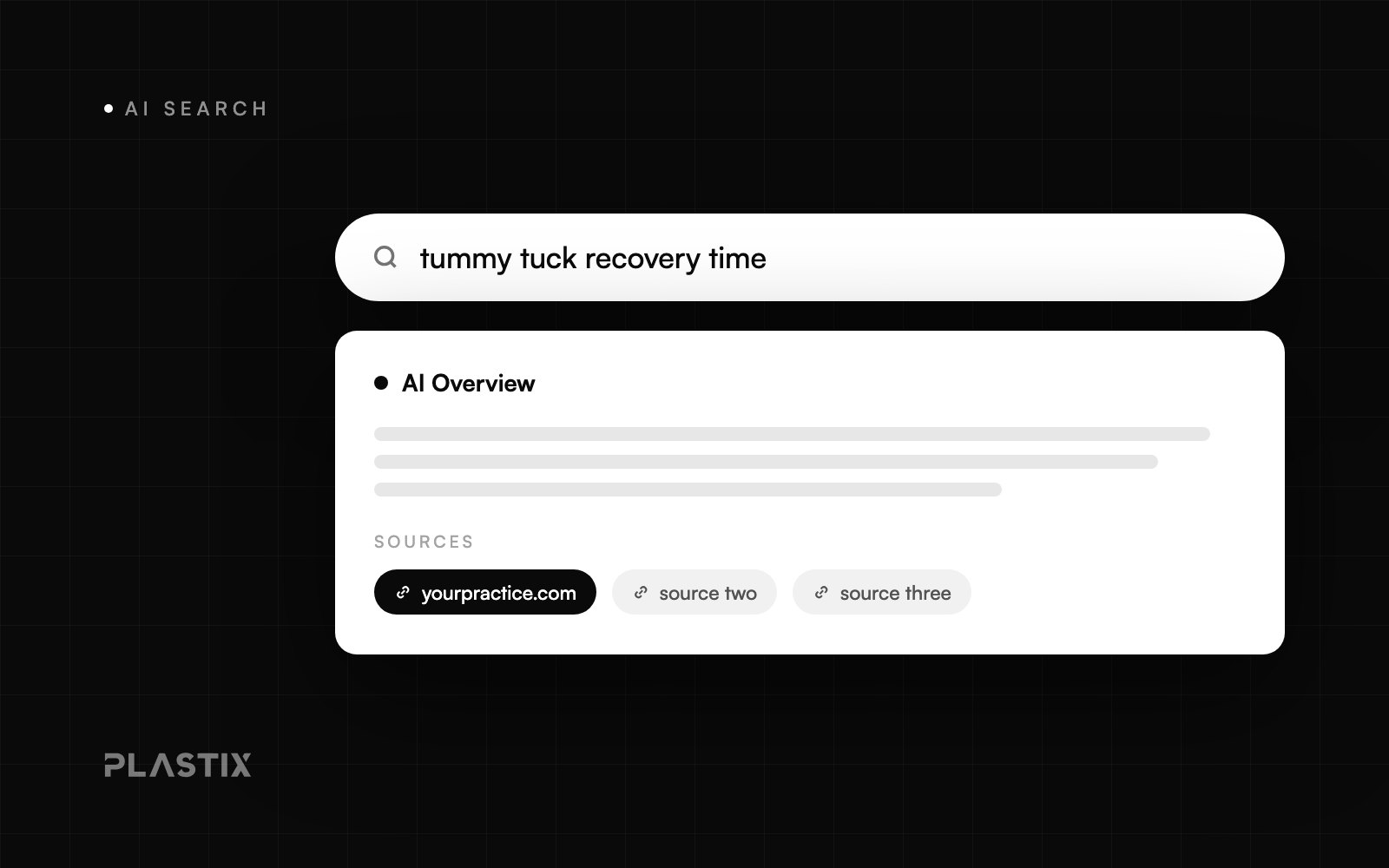
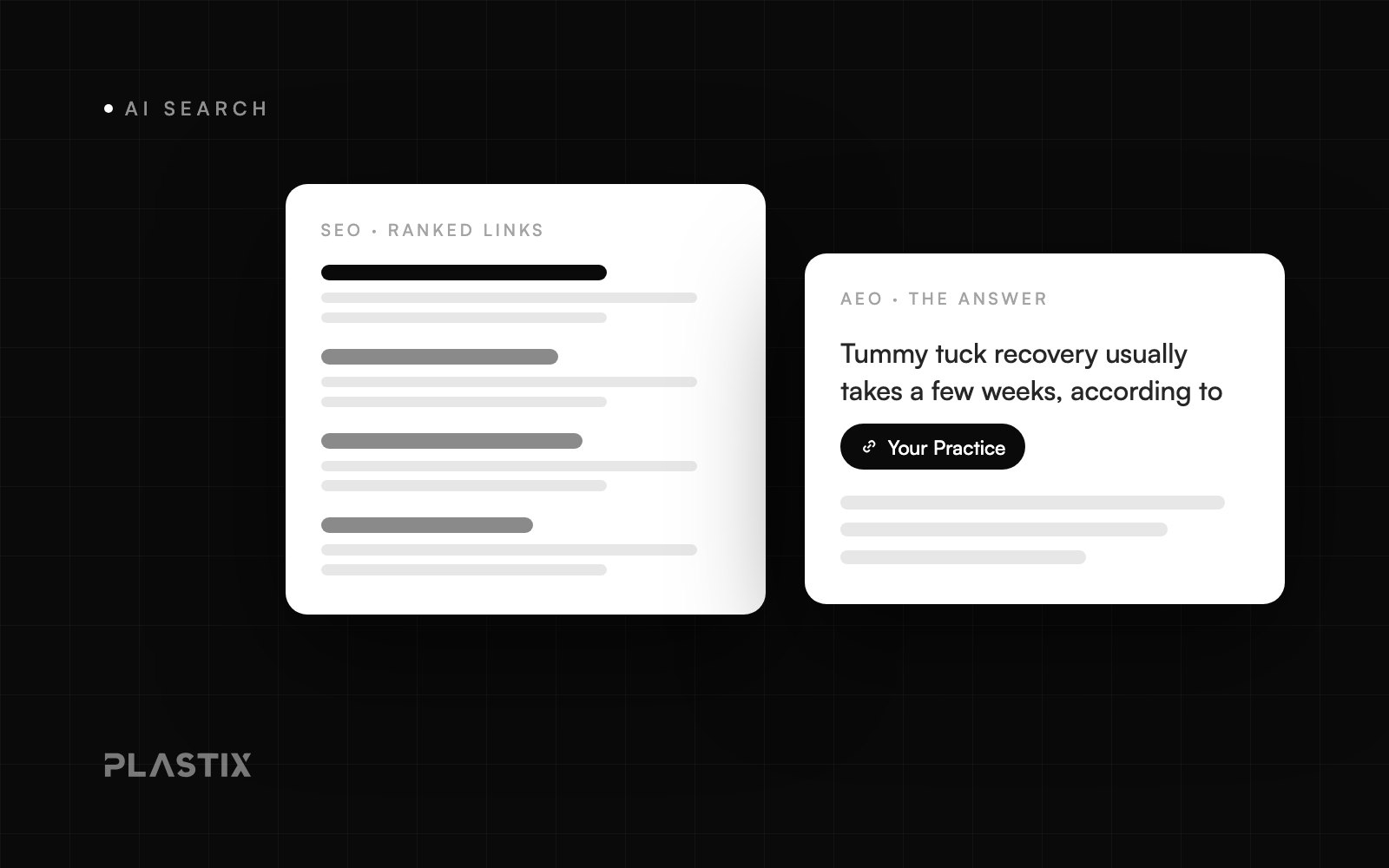
Nobody can make ChatGPT recommend your practice, and anyone who promises that is guessing. What you can do is make your practice easy to find, easy to verify, and easy to describe in the places ChatGPT looks when a patient asks for a recommendation. That comes down to five things: crawler access, consistent practice facts, real reviews and outside mentions, answer-first procedure pages, and regular testing of what ChatGPT says about you.
What Happens When a Patient Asks ChatGPT for a Recommendation?
Say a patient types "who's the best tummy tuck surgeon near me?" According to OpenAI's help center, ChatGPT may search the web automatically when a question would benefit from current information. It can estimate the person's general location from their IP address and rewrite the question into a search query, the same way OpenAI's own example turns "good restaurants near me" into "top restaurants San Francisco."
OpenAI says ChatGPT search sometimes partners with outside search providers, and its help center names Microsoft among them. It ranks results using multiple factors meant to surface relevant, reliable information, and OpenAI states plainly that placement is not guaranteed. The patient sees a short answer with citations.
The practical question: when ChatGPT runs that search, does your practice show up, and do the pages it finds make a clear case for you? For the fuller picture of those sources, read where ChatGPT gets information about your practice.
Step 1: Is ChatGPT Allowed to Read Your Site?
This is the fastest fix. OpenAI uses a crawler called OAI-SearchBot to surface websites in ChatGPT search. Its documentation says sites that opt out of OAI-SearchBot will not be shown in ChatGPT search answers (they may still appear as plain navigational links).
Ask whoever manages your website to check three things:
- Your robots.txt file. It should not block OAI-SearchBot. OpenAI says it takes about 24 hours for its systems to pick up a robots.txt change.
- Your firewall or CDN. OpenAI's help center says your host or content delivery network must allow traffic from OpenAI's published search crawler IP addresses. Services like Cloudflare sort AI crawlers into search, agent, and training categories, so confirm search crawlers are allowed.
- Leftover noindex tags. OpenAI tells publishers to use a noindex tag when they want a page kept out of ChatGPT, so a tag left behind after a site redesign can quietly hide a procedure page.
One distinction trips people up. GPTBot is a separate OpenAI crawler that collects content that may be used to train its models. OpenAI's documentation says each setting is independent, so you can block GPTBot and still allow OAI-SearchBot. Blocking OAI-SearchBot is the setting that keeps you out of search answers.
Step 2: Do Your Practice Facts Match Everywhere?
When ChatGPT pulls several sources about your practice, they should agree. If your website lists three surgeons, your Google Business Profile lists two, and a directory still shows your old suite number, your practice becomes harder for any system (or any patient) to describe with confidence.
Pick one version of your core facts and use it everywhere:
- Practice name, written exactly the same way each time
- Address, phone number, and hours
- Each provider's full name, credentials, and board certification
- The procedures and treatments you actually offer, named the way patients search for them ("tummy tuck" alongside "abdominoplasty")
Then update the listings that feed search results. Start with your Google Business Profile. Next, claim your Bing Places listing, since Microsoft is one of the search providers OpenAI references. Bing Places can import your details from Google Business Profile. After that, check the review sites and directories aesthetic patients actually use, such as RealSelf, Yelp, and Healthgrades.
On your own site, give every provider a bio page and add structured data (schema markup) that states your business name, address, phone, and hours in a machine-readable format. Google documents how this markup communicates business details to search. It won't guarantee a ChatGPT mention, but it removes ambiguity. This cleanup is where our plastic surgery SEO work starts.
Step 3: Are Real Patients and Outside Sources Talking About You?
When a patient asks for "the best med spa for lip filler in Austin," a credible answer needs evidence beyond your own website. Reviews and third-party mentions are that evidence.
Specific reviews say more than generic ones. "Dr. Patel walked me through every step of my rhinoplasty recovery" tells a reader far more than "Great experience!" You can't script what patients write, but you can make asking a habit: a follow-up text or email after a milestone appointment, with a direct link to your review page.
Keep the program clean. Google's review policy prohibits offering incentives such as payment, discounts, or free services in exchange for reviews. It also prohibits selectively asking only happy patients, discouraging negative reviews, and pressuring patients to review while they're in your office. So no "$50 off your next Botox for a review," no reviews from staff or friends, and requests go to all recent patients.
Outside mentions matter too. Good sources for an aesthetic practice include:
- Local news features, expert quotes, and city magazine "best of" lists
- Professional society member directories and hospital affiliation pages
- Podcast interviews, patient education events, and community sponsorships
- Honest participation in patient forums, clearly identified as your practice
Don't plant posts on Reddit or forums pretending to be a patient. It's deceptive, and if discovered, it becomes the story people find about you.
Step 4: Do Your Procedure Pages Answer the Question First?
ChatGPT's answers are short, and they cite pages. A page that states answers plainly is easier to quote than one that opens with three paragraphs about your philosophy of care.
Structure each procedure page so the top of the page covers what patients ask in consultations:
- What the procedure is and who is a good candidate
- Who performs it at your practice, with credentials
- A typical recovery timeline and what to expect week by week
- How pricing works (a range or starting point, if you're comfortable publishing one)
- Risks and common concerns, answered in plain language
"How long is CoolSculpting recovery?" deserves a one or two sentence answer directly under a heading that asks it. Mention your city and neighborhood naturally, because patients ask location-specific questions.
Stay compliant while you do it. Describe typical experiences, don't promise outcomes, and keep before-and-after claims honest. The same structure is worth having for Google's AI results, which we cover in how to show up in Google AI Overviews. If your pages need a rebuild, our med spa SEO team can help.
Step 5: What Does ChatGPT Say About You Today?
Once a month, start a Temporary Chat and turn personalization off when you open it. OpenAI says a non-personalized Temporary Chat doesn't use your memories or custom instructions, which matters because saved memories can shape how ChatGPT rewrites a search. Then ask the way patients would:
- "Who are the best plastic surgeons for breast augmentation in [city]?"
- "What's a good med spa near [neighborhood] for Botox?"
- "What do patients say about [practice name]?"
- "Who performs rhinoplasty at [practice name], and are they board certified?"
For each answer, note whether you're named, which competitors appear, and which sources are cited. The citations show you where to focus: if a directory with your old address keeps appearing, fix that listing first. Flag any wrong facts and look for the outdated page or listing behind them.
Location changes results. OpenAI says ChatGPT estimates general location from your IP address, and a VPN can change that estimate. Name the city in your prompts instead of relying on "near me."
Finally, check your analytics. OpenAI adds utm_source=chatgpt.com to referral links from ChatGPT, so Google Analytics can show you visits that came from ChatGPT answers.
What to Do This Week
- Check your robots.txt file and confirm OAI-SearchBot isn't blocked
- Ask your web host or IT contact whether your firewall or CDN blocks AI search crawlers
- Run the four test prompts above in a non-personalized Temporary Chat and save the answers
- Compare your name, address, phone, and provider list across your website, Google Business Profile, and Bing Places
- Set up a review request that goes to every recent patient, with a direct link and no incentive
- Rewrite the top of your highest-value procedure page so it answers the three questions patients ask most
Where Plastix Fits
This work overlaps with strong local SEO and needs steady attention. Our AI search optimization service runs the questions your patients ask through ChatGPT and other AI tools every month, records what they say about you, and fixes what keeps your practice out of the answer. We hold ourselves to the same standard: as of September 2026, SEMrush shows Plastix inside Google's AI Overview for 43 search terms, 8.7% of the keywords we rank for.
If you want to know where your practice stands today, book a consultation and we'll walk through it with you.
Frequently Asked Questions
Can I pay to have ChatGPT recommend my practice?
No. OpenAI is testing ads in ChatGPT for some Free and Go users, but it says ads do not influence ChatGPT's answers, run on separate systems, and appear clearly labeled below responses. OpenAI also says ads aren't placed near personal health conversations. There is no paid route into the answer itself, and OpenAI says placement in search results isn't guaranteed, so be skeptical of any vendor selling guaranteed ChatGPT recommendations.
Does blocking GPTBot keep my practice out of ChatGPT search?
Not according to OpenAI's crawler documentation. GPTBot collects content that may be used to train OpenAI's models, while OAI-SearchBot is the crawler used to surface websites in ChatGPT search. OpenAI says the settings are independent, so a practice can block GPTBot and still allow OAI-SearchBot. Blocking OAI-SearchBot is the setting that keeps your site out of ChatGPT search answers, so check that one first.
How long does it take to start showing up in ChatGPT?
It depends on what's holding you back. If a robots.txt rule was blocking OpenAI's search crawler, OpenAI says its systems adjust about 24 hours after you update the file. Building reviews, correcting listings, and earning outside mentions happens gradually, and nobody can promise a timeline. Retest with the same prompts each month so you can see real movement instead of guessing.
Why does ChatGPT recommend different practices to different people?
Several things change the answer. OpenAI says ChatGPT can use an approximate location based on IP address, may use saved memories when rewriting a search query, and sometimes sends rewritten queries to outside search providers. Two patients in different neighborhoods, or with different chat histories, can see different lists. That's why a single test proves little, and why a non-personalized Temporary Chat with the city named gives you a cleaner baseline.
Is showing up in ChatGPT different from ranking on Google?
The two overlap heavily. Both reward a crawlable site, accurate business listings, real reviews, and pages that answer patient questions clearly. The differences are in the details. ChatGPT search relies on OpenAI's own crawler and partly on outside search providers, including Microsoft. A practice that ranks well on Google should still confirm OpenAI's crawler can reach its site and that its Bing Places listing is accurate.
Related Services