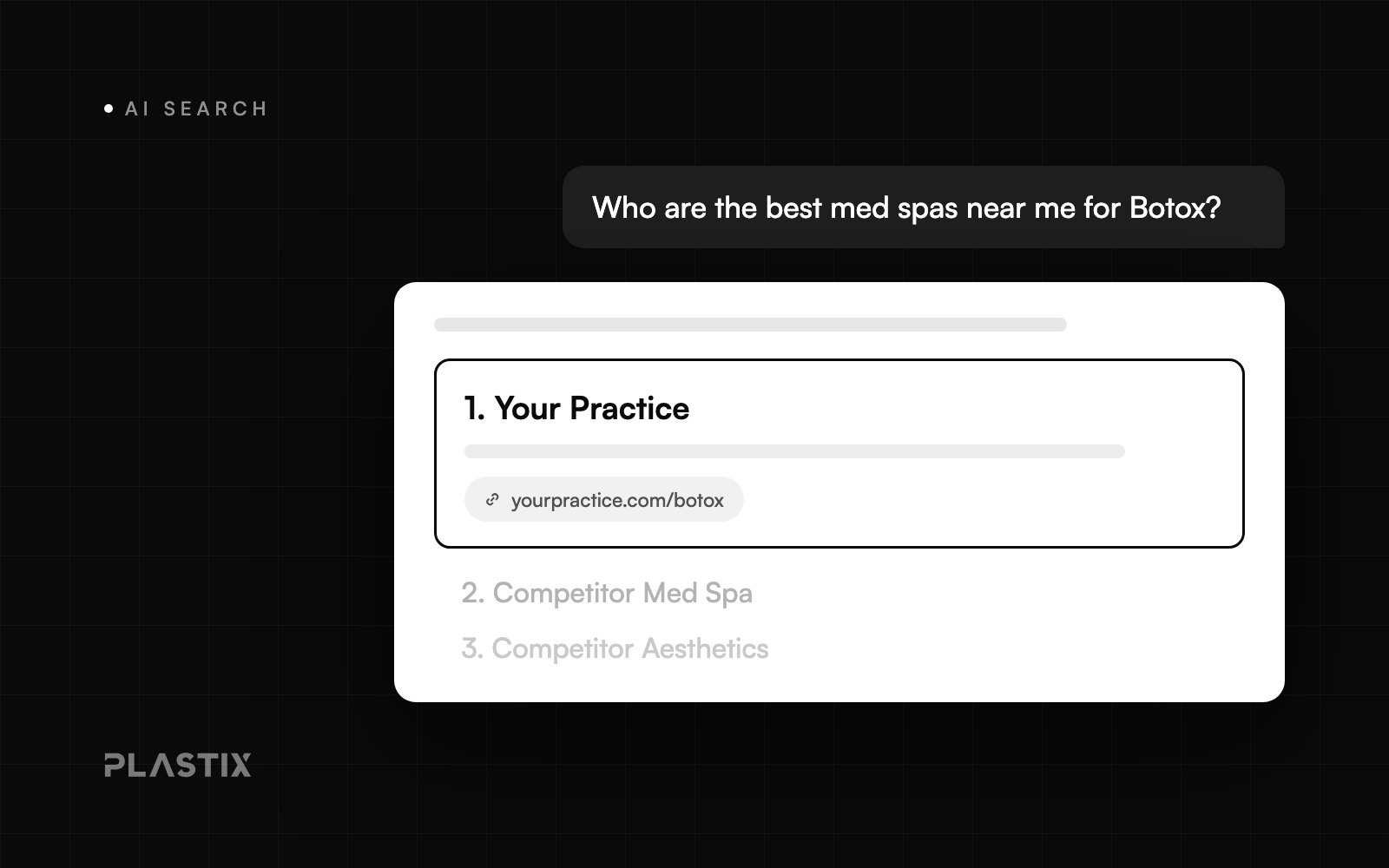
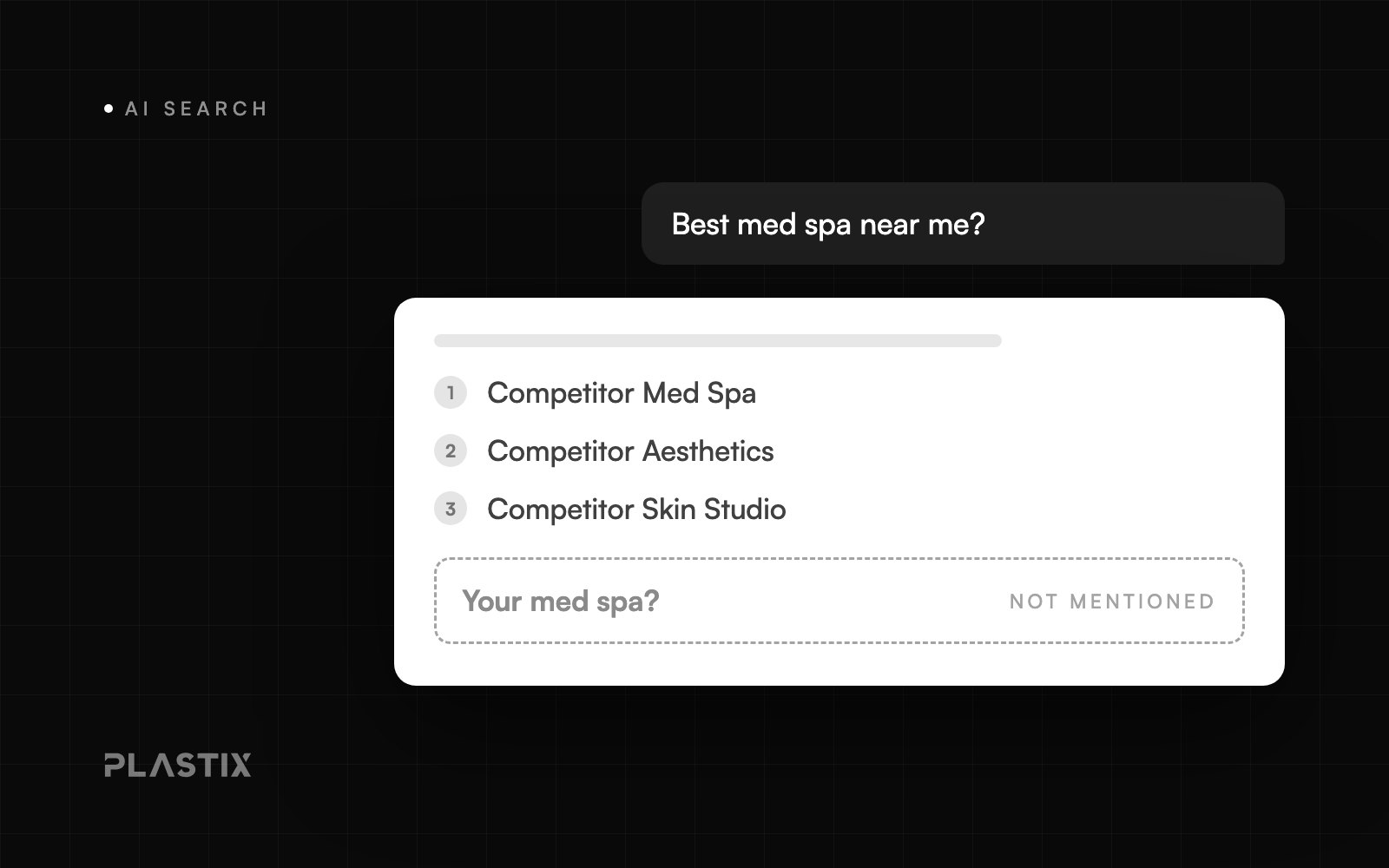
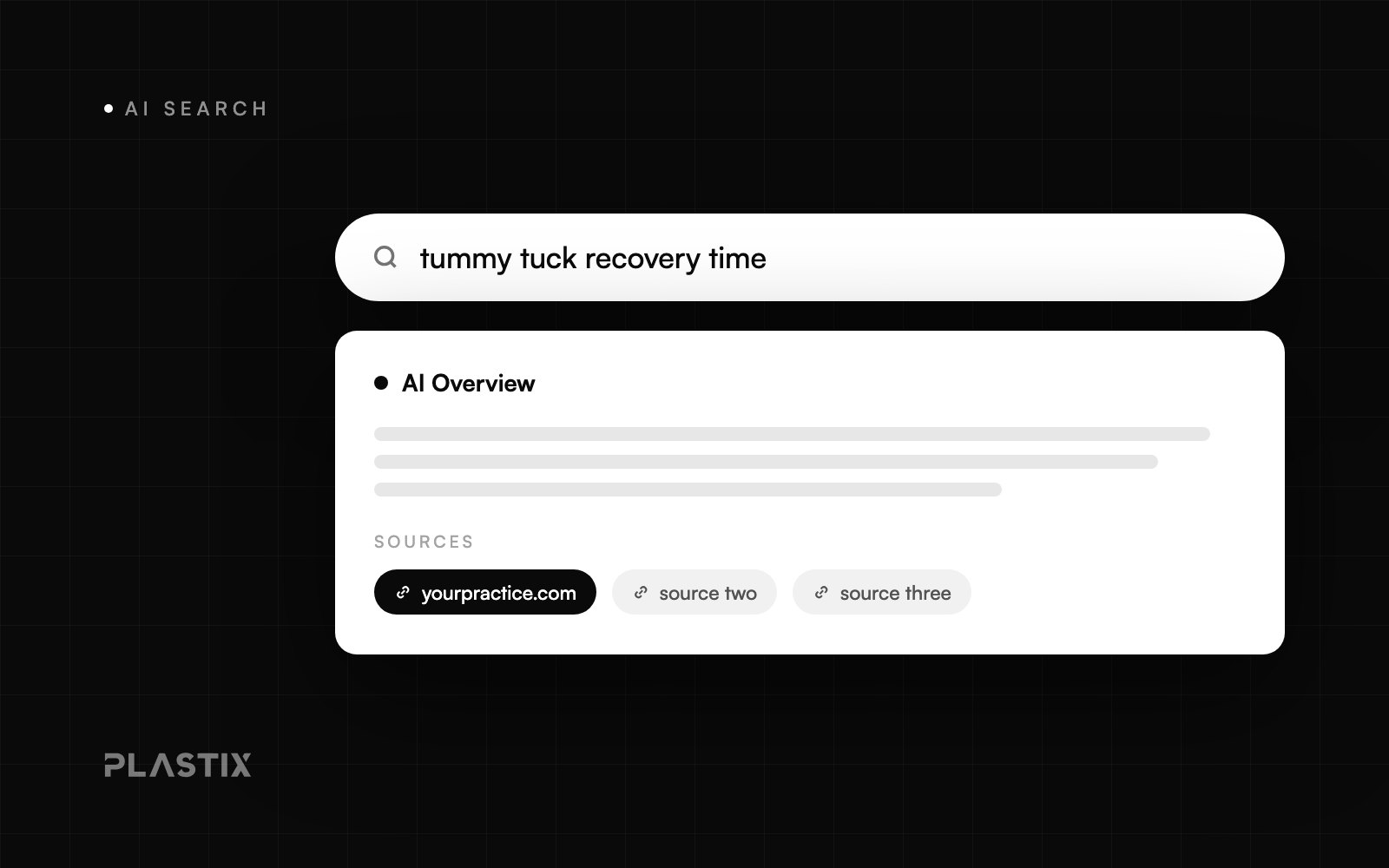
Where Does ChatGPT Get Information About Your Practice?
ChatGPT learns about your practice from training data and live web sources. Here's where it looks and how to fix wrong answers at the source.
Eric Dunn
October 12, 2026
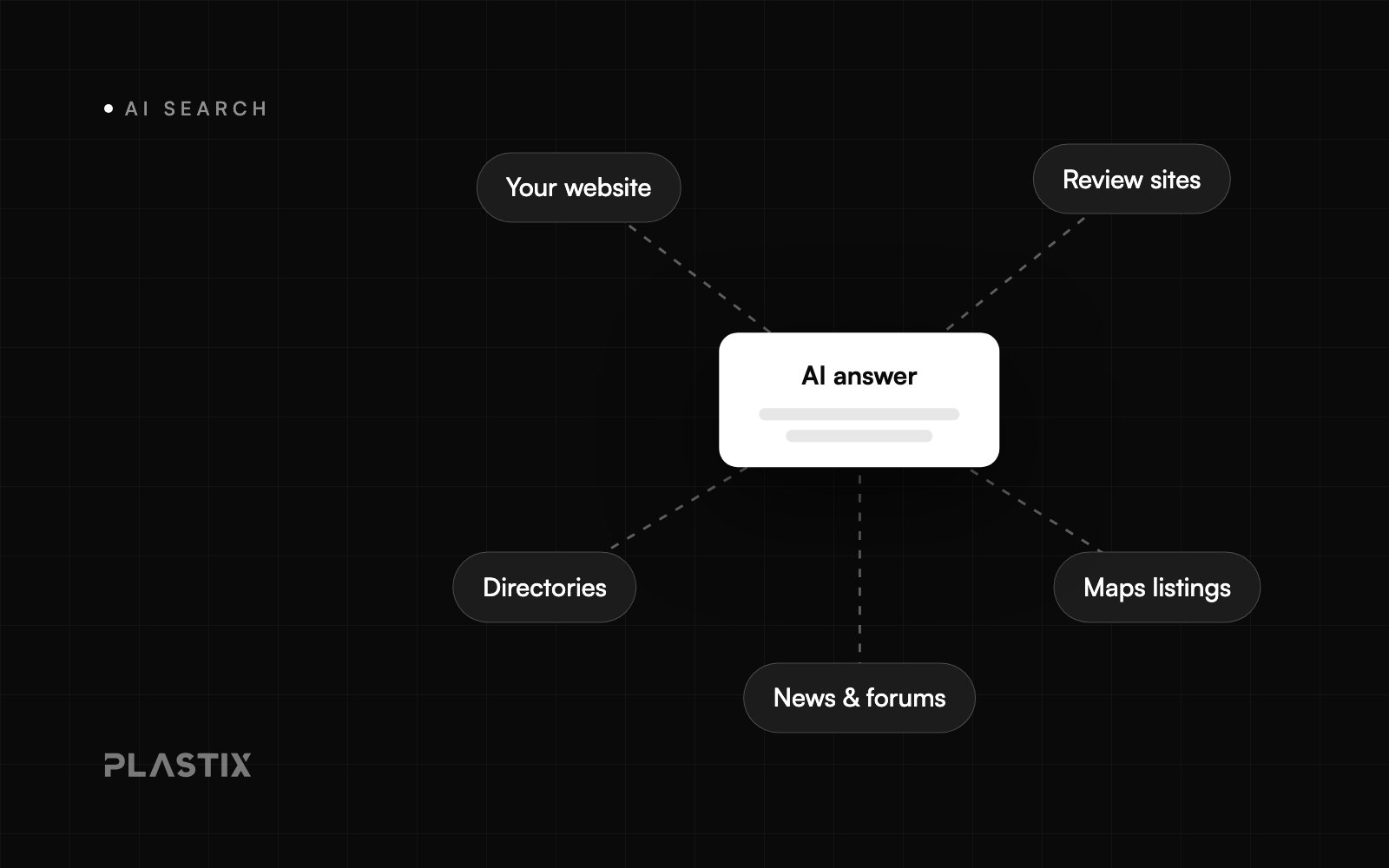
ChatGPT gets information about your practice from two places: what its underlying model absorbed during training, and what it looks up live when it searches the web. Live answers draw on search results, your own website, review and listing sites like Yelp, directories, news coverage, and forums like Reddit. When ChatGPT gets something wrong about your practice, the fix almost always lives in one of those sources.
What's the Difference Between Training Data and Live Search?
Think of training as the model's long-term memory. OpenAI says its models are developed using information that's publicly available on the internet, information it accesses through partners, and information from users, trainers, and researchers. That learning stops at a fixed point. OpenAI's model documentation lists a knowledge cutoff date for each model, and anything published after that date isn't part of what the model learned.
So if your practice moved, added a second surgeon last spring, or stopped offering CoolSculpting, the model's memory may not know.
Live search fills that gap. OpenAI says ChatGPT may search the web on its own when a question would benefit from current information, and users can also turn search on manually. When it searches, ChatGPT rewrites the question into search queries, reads the results, and answers with links to its sources.
That gives you a useful rule of thumb. If an answer about your practice includes citations, you can click through and see where each detail came from. If it has no citations, it may be coming from the model's memory alone.
Where Do ChatGPT's Live Answers Come From?
OpenAI hasn't published a complete list of sources, but its documentation and public deals point to six categories.
Search indexes and OpenAI's own crawler
OpenAI runs a crawler called OAI-SearchBot to surface websites in ChatGPT search, and its documentation says sites that block it won't be shown in ChatGPT search answers. OpenAI also says ChatGPT search uses third-party search providers, and it has named Microsoft's Bing among them.
Your practice website
Procedure pages, provider bios, pricing pages, and your contact page are all fair game. So are old pages you forgot about, like a lip filler special from a few years ago that still loads.
Structured data (schema markup) on those pages states your name, address, and hours in a machine-readable format. Google says it isn't required for its AI search features, while a Microsoft Bing product manager reportedly told a 2025 conference audience that schema helps Microsoft's AI models understand content. Treat it as helpful housekeeping with no guaranteed payoff.
Review platforms
Yelp is the clearest documented example. In July 2026, Yelp agreed to license its reviews, ratings, photos, and business information to OpenAI, and its second-quarter 2026 shareholder letter says Yelp ratings and reviews began powering ChatGPT's local experience in relevant categories.
What about Google reviews? We found no OpenAI documentation saying ChatGPT reads your Google Business Profile reviews directly, so don't assume it does. Google reviews matter a great deal for Google's own AI features, covered below.
Directories and healthcare listing sites
RealSelf, Healthgrades, Zocdoc, professional society member directories, and local "best of" lists are public pages that search engines index. When they rank for your practice name or for "rhinoplasty in [city]," they can end up in an AI answer with whatever details they show today.
Maps and local business data
For "med spa near me" questions, OpenAI says ChatGPT may share a general location with trusted third-party providers to help return nearby business listings. OpenAI hasn't published a full list of those providers, so the safe move is keeping every major listing accurate.
News and forums
OpenAI has content partnerships with news publishers, and in 2024 it announced a partnership with Reddit that gives it access to Reddit's Data API to bring Reddit content into ChatGPT. A years-old Reddit thread about your practice, or a local news story about your opening, can shape how you're described.
How Do Google, Perplexity, and Copilot Differ?
The same kinds of sources show up across tools, but each one is built on a different foundation.
Google AI Overviews, AI Mode, and Gemini
Google says its AI search features retrieve pages from its own Search index using its core ranking systems. It also says Google Business Profile can help your services appear in AI responses, and the Gemini app pulls addresses, websites, ratings, and opening hours from Google Maps. For Google, your Business Profile and Google reviews sit front and center. We go deeper in how to show up in Google AI Overviews.
Perplexity
Perplexity runs its own crawler, PerplexityBot, and its own web index, and its answers carry numbered citations. In 2024 it licensed Yelp data to show maps, reviews, and photos for local business questions.
Microsoft Copilot
Microsoft's documentation says Copilot sends search queries to Bing when web information would improve a response, then uses those results to write the answer. That makes an accurate Bing Places listing worth the small effort. Bing Webmaster Tools also has an AI Performance report showing which of your pages get cited in Copilot and Bing's AI-generated summaries.
Why Does AI Get Practice Details Wrong?
Wrong answers usually trace back to one of four problems:
- An outdated listing. A directory still shows your old suite number, or a provider who left years ago still has an active profile.
- A stale page on your own site. An old CoolSculpting page stays indexed after you switched devices, or a Botox pricing promo from a past year still loads.
- Conflicting sources. Your website says you're open Saturdays, Yelp says you're closed, and the AI has to pick one.
- Old training data or plain error. OpenAI itself says ChatGPT can produce incorrect or misleading answers, and a model working from dated training data can fill gaps with guesses.
Correct the Source Behind the Answer
There's no dependable way to edit what ChatGPT says about you directly. You can flag a bad answer with the thumbs-down button, which sends feedback to OpenAI, but that won't reliably change the next answer. The lasting fix is changing what the AI reads.
Ask the question with search turned on and click the citations to find the exact page or listing behind the error. If it's your page, update it, or remove it and redirect the URL to the current version. If it's a third-party listing, claim it and edit it, or contact the site and ask for a correction. Then give search engines time to recrawl before you ask again. Microsoft's Fabrice Canel has recommended IndexNow for telling Bing when pages are published or updated.
What Is llms.txt, and Does Your Practice Need One?
llms.txt is a proposed standard published by Jeremy Howard in September 2024. It's a plain Markdown file at the root of your website that summarizes what the site covers and links to its most useful pages, so AI tools can find the important material quickly. The proposal received a version 2 update in August 2026.
The catch is adoption. Google's Gary Illyes said in July 2025 that Google doesn't support llms.txt and isn't planning to, and Google's current AI optimization guide says Google Search ignores these files. OpenAI's and Perplexity's crawler documentation explains how to manage their bots with robots.txt and doesn't say they read llms.txt on your site, even though both companies publish llms.txt files for their own developer docs. As of September 2026, we couldn't find any major AI search company confirming that it uses llms.txt to choose or cite sources.
Our take: it's cheap to add and won't hurt. Just don't pay a premium for it, and don't let it jump ahead of your listings, reviews, and procedure pages, which AI tools are documented to use.
Audit Your Sources: What to Do This Week
- Ask ChatGPT (with search on), Perplexity, Gemini, and Copilot "What do you know about [practice name] in [city]?" and write down every source they cite
- Compare your Google Business Profile, Bing Places, and Yelp listings for address, phone, hours, providers, and services
- Claim your Yelp page if you haven't, since ChatGPT's local answers now draw on Yelp ratings and reviews
- Check RealSelf, Healthgrades, Zocdoc, and your professional society directory for former providers, discontinued treatments, and old locations
- Search your own site for departed providers' names, old prices, retired devices, and your previous address, including footers, PDFs, and schema markup
- Search Reddit and local news for your practice name and note anything outdated; if you respond, do it openly as the practice and never pose as a patient
- If you use Bing Webmaster Tools, open the AI Performance report to see which pages Copilot cites
- Confirm your robots.txt isn't blocking OAI-SearchBot or PerplexityBot, then use our guide on how to get your practice recommended by ChatGPT for the next steps
Where Plastix Fits
Source cleanup is unglamorous, and it never fully ends. Providers join and leave, prices change, and old pages linger. Our AI search optimization work tracks what ChatGPT, Google, Perplexity, and Copilot say about your practice, traces wrong answers back to their sources, and fixes them as part of a broader plastic surgery SEO or med spa program.
If you want to see what AI tools say about your practice right now, book a consultation and we'll walk through it together.
Frequently Asked Questions
Does ChatGPT use Google reviews?
OpenAI hasn't said that ChatGPT reads reviews directly from Google Business Profiles, and we found no reliable source confirming it. What is documented is Yelp: in 2026, Yelp said its ratings and reviews began powering ChatGPT's local experience in relevant categories. Google reviews still matter, because Google says Business Profile information can help practices appear in its AI responses, and Gemini pulls ratings from Google Maps. Ask every patient for honest reviews, and never offer incentives, which Google's policies prohibit.
How do I correct wrong information ChatGPT gives about my practice?
Ask the same question with search turned on and click the citations to find where the error came from. Then fix that source: update or remove the page on your website, edit your Google, Bing, or Yelp listing, or ask a directory or publication for a correction. You can flag the answer with a thumbs-down, but that only sends feedback to OpenAI. Check again after search engines have had time to recrawl the updated pages.
Does schema markup help AI tools understand my practice?
It can help, but it isn't a shortcut. Google says structured data isn't required for its AI search features and there's no special schema for AI, though it still supports rich results and should match what's visible on the page. A Microsoft Bing product manager has reportedly said schema helps Microsoft's AI models understand content. Accurate business markup that repeats your real name, address, hours, and providers is worth having.
What is llms.txt, and should my practice add one?
llms.txt is a proposed Markdown file, placed at the root of a website, that summarizes the site and links to its most important pages for AI tools. Jeremy Howard proposed it in 2024. Google has said it doesn't support llms.txt, and as of September 2026 we found no major AI search company confirming it uses the file to pick sources. It costs little to add, so it's fine to have, but prioritize listings, reviews, and accurate pages first.
Does Perplexity use the same sources as ChatGPT?
There's overlap, but the plumbing differs. Perplexity runs its own crawler, PerplexityBot, and its own web index, and it shows numbered citations with its answers. It has also licensed Yelp data for local business results. ChatGPT combines OpenAI's own crawler with third-party search providers such as Bing. For Perplexity SEO, the basics are the same: let PerplexityBot crawl your site, keep listings accurate, and publish clear pages that answer patient questions.
Related Services